
Lessons From Buffett & Why Market Volatility Could Be a Setup for Opportunity
Buffett's case for patience, and why April's sell-off left high-growth stocks cheaper than the market overall.
A key principle of investing is that patience, discipline, and maintaining a long-term perspective are what drive financial success. Perhaps no investor has captured this wisdom as eloquently as Warren Buffett over his five-decade career as CEO of Berkshire Hathaway. Buffett’s recent retirement announcement is an opportunity to revisit investment principles that are not only relevant in today’s market environment, but have also stood the test of time.
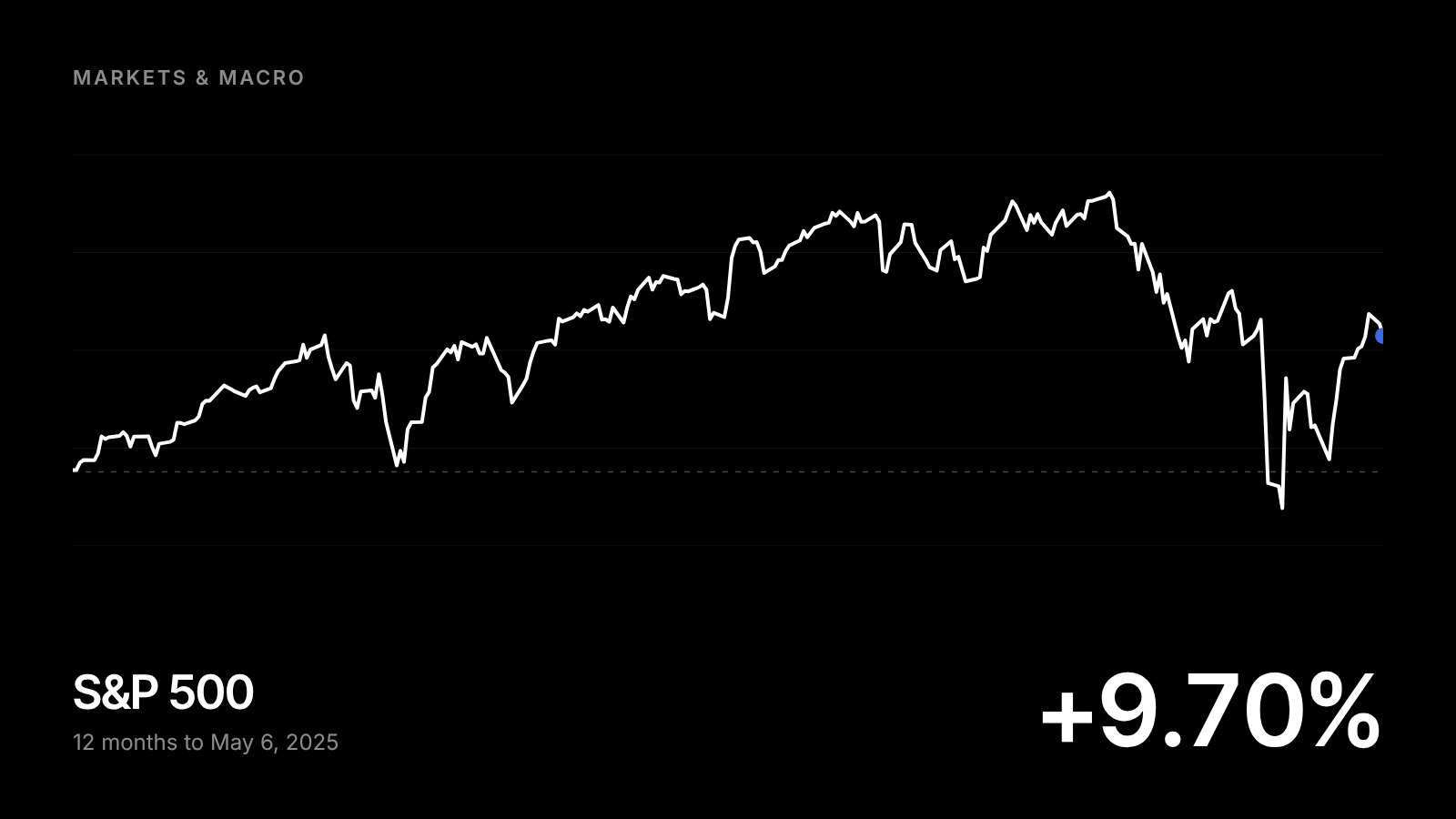
An often-used Buffett quote is to “be fearful when others are greedy, and greedy when others are fearful.” While steady markets are more comfortable, it’s during difficult periods that opportunities truly present themselves. April’s market volatility is a perfect example, spurred by tariffs, inflation, interest rates, and more. Those investors who have been able to look past short-term news and market swings, and instead consider their overall portfolios, are likely to be better positioned for the future.
This context is especially important today. While the overall market has become somewhat cheaper, valuations remain close to or slightly above long-term historical averages. However, under the surface, the picture is quite different—particularly in the high-growth sector of the market. This area, which our Innovation portfolio closely tracks (alongside indices like the EM Cloud Index), is now trading at historically low valuation levels.
Unlike the broader S&P 500, which is typically assessed using earnings-based metrics, high-growth companies are better evaluated using revenue multiples. As shown in the chart above, the median EV/NTM revenue multiple for top growth names has fallen to just 5x, down nearly 75% from 2021 highs, and even well below pre-COVID averages. This kind of compression reflects a significant valuation reset—one we believe positions these names for powerful forward returns.
For long-term investors, this creates a meaningful opportunity. We expect continued strength in the high-growth sector, and this valuation backdrop could support even greater outperformance across our portfolios, especially Innovation.
Market volatility has improved valuations
“Whether we're talking about stocks or socks, I like buying quality merchandise when it is marked down.”
– Warren Buffett, 2018 Berkshire Hathaway annual letter
An important tenet of Buffett’s approach is investing in companies that are undervalued. While broad stock market valuations rose to nearly historic highs earlier this year, the recent pullback and steady earnings growth have brought valuations back to more attractive levels. At just under 20x, the S&P 500's price-to-earnings ratio is now in-line with its average over the past decade. This “valuation reset” is the result of short-term concerns about tariffs and economic uncertainty, but might also reflect opportunities.
This is because, over longer time horizons, valuation ratios serve as the best gauge of market attractiveness. While market moves that occur over days and months are often dominated by news headlines, company-specific events, and geopolitics, these concerns typically settle and fade over time. When looking out over years and decades, what matters more are the overall growth trends and whether investors paid a reasonable price when they made their original investment.
Valuations are one way to gauge whether investors are paying a reasonable price. Rather than focusing on stock prices alone, valuations tell us what you get for that price—in terms of earnings, book value, cash flow, dividends, and more. Purchasing assets when valuations are attractive typically improves the odds of stronger future returns, while investing when markets appear expensive often leads to more modest long-term results. For this reason, valuations have historically shown a strong correlation with long-term portfolio performance.
It's important to recognize that valuations should not be viewed as market timing instruments for making all-or-nothing investment decisions. Rather, they are an important input into building appropriate portfolios. Understanding current valuation levels can help identify opportunities and set expectations in all phases of the market cycle.
Corporate earnings have grown steadily
“Focus on the future productivity of the asset you are considering. If you don't feel comfortable making a rough estimate of the asset's future earnings, just forget it and move on.”
– Warren Buffett, 2013 Berkshire Hathaway annual letter
In addition to more attractive prices, another important reason valuations have improved is the steady growth of corporate earnings. With more than three-quarters of S&P 500 companies having reported first-quarter results, earnings have grown an impressive 12.8%, according to FactSet. This significantly exceeds the 7.2% growth rate expected at the beginning of earnings season. This positive surprise has been driven by several sectors, particularly Communication Services, Financials, Healthcare, and Information Technology, which continue to grow their profit margins.
In contrast, the Consumer Discretionary and Consumer Staples sectors have shown relative weakness, beating their sales targets at a lower rate. This aligns with survey data indicating consumers are becoming more cautious about spending as they prioritize necessities amid inflation concerns.
Beyond the numbers, earnings calls have provided valuable insights into how companies are navigating the current environment. Three key themes have emerged:
- Tariff caution – Many companies have adopted a "wait-and-see" approach. Given limited visibility, some have suspended guidance, while others have incorporated preliminary tariff estimates into their forecasts.
- Capital investment resilience – Despite near-term uncertainty, capital spending remains strong—especially in tech. Major tech firms are continuing to invest in AI infrastructure and next-gen platforms, signaling long-term growth confidence.
- Strategic transformation – Companies across sectors are adapting to rapid technological and consumer changes. While some of these shifts may compress margins in the short term, they’re intended to drive resilience and leadership over time.
Dividends continue to support portfolios
“It’s not good news when any company cuts its dividend dramatically.”
– Warren Buffett, 2023 Berkshire Hathaway annual meeting
Even though Berkshire Hathaway has rarely paid dividends, Buffett has benefited from the earnings and dividend-generating ability of his portfolio companies. His mentor, Benjamin Graham, focused heavily on the importance of dividends as an indicator of corporate financial health in The Intelligent Investor. While investors typically focus on stock prices, dividends have historically been a major contributor to long-run returns.
Despite ongoing market uncertainty, dividends have continued to grow, contributing to total return for investors. Many sectors still offer dividend yields around their 10-year averages—important for income-seeking investors. Dividend cuts are rare outside of economic shocks, and sustained payouts are often a sign of business strength.
Importantly, dividends represent real cash, not just accounting profits. So when companies maintain or increase their dividends, it’s a sign of underlying financial health and confidence from corporate management.
The Bottom Line
As Warren Buffett’s career shows, the best way to navigate uncertainty is with a patient, long-term approach to investing. That principle has never been more relevant than today. Even as volatility challenges short-term confidence, the valuation reset across high-growth sectors creates a foundation for opportunity—particularly for investors focused on fundamentals and long-term returns.
We believe the portfolios we manage—especially Innovation—are well-positioned to benefit from these dynamics. As always, we remain focused on quality, discipline, and capturing growth where it’s most likely to be rewarded.